How the Cricket Ball Seam Shapes a Bowler’s Grip
The cricket ball seam gives bowlers a tactile grip reference. Learn how to inspect its stitching, set your fingers comfortably and handle a worn ball.
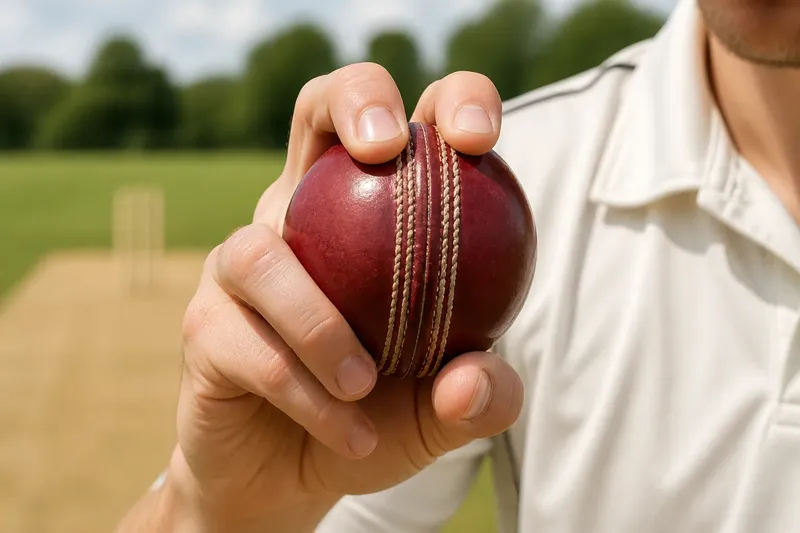
Before a practice delivery, a bowler turns the cricket ball seam beneath a fingertip, then settles the ball into the hand. That raised line is part of the ball’s construction and a practical reference for placing the fingers; it does not, by itself, predict what the delivery will do.
Stitching and shape
A cricket ball has a firm core and an outer casing, commonly leather. The seam is the joined line where sections of the casing meet. Stitching secures the join, leaving a ridge that can be seen and felt against the smoother surface.
Turn the ball under a lamp or in daylight and follow the seam around its circumference. The thread interrupts the feel of the casing, giving the hand a distinct point of reference. The exact construction can vary by ball type, so consult the maker’s information if you need details about a particular ball.
A tactile grip reference
A common starting grip places the index and middle fingers on either side of the seam, with the thumb supporting the ball underneath. Finger spacing and pressure are personal: hand size, comfort and the intended delivery all matter. The seam offers a guide, not a single required position.
Try holding a suitable practice ball while standing still. Turn the seam towards you, place the first two fingers on either side without squeezing, and adjust until the hold feels secure and comfortable. If your fingers slide or your hand feels strained, change their spacing or pressure rather than forcing a grip that does not suit you.
Orientation at release
A bowler can use the seam as a visible marker when setting the hand before delivery. Terms such as “upright seam” describe how the ridge is oriented as the ball leaves the hand. They describe an intended position, not a promise about movement.
The seam is one part of a delivery. The bowler’s release and the condition of the ball also matter, so avoid treating the ridge as the sole explanation for what happens next.
Say a beginner is practising from a standing position and loses track of the ball’s orientation. They start each attempt with the seam facing the same way, then pause to notice how the hand finishes. The resulting observation is whether the setup felt repeatable and comfortable, not whether the ball moved in a particular way.
Inspecting a used ball
Ordinary use can scuff the casing and soften the feel of the stitching. Rotate the ball under neutral light rather than judging it from one angle, and distinguish the stitched ridge from changes in the surrounding surface.
- Visibility: Check whether you can follow the seam around the ball; if it is clear, use it as a grip reference, but if it is hard to see, inspect it under better light.
- Stitching: Check for loose or broken thread; if the stitching appears intact, continue with a normal visual inspection, but if it looks damaged, show the ball to the person responsible for equipment.
- Ridge: Feel lightly for a defined raised line; if it feels consistent, use it to orient your fingers, but if it feels uneven or compromised, ask whether the ball should remain in use.
- Casing: Look for obvious cuts or damage; if the surface appears sound, follow the session’s usual handling guidance, but if it is damaged, stop and ask the coach or official to assess it.
- Grip comfort: Hold the ball without squeezing; if your fingers settle comfortably, keep that position, but if the hold feels strained, adjust your spacing or ask a coach for guidance.
- Use rules: Check the competition or club guidance for the ball in use; if it permits the ball’s current condition and handling, follow those rules, but if you are unsure, ask the umpire or equipment lead before continuing.
Common seam questions
Why is the cricket ball seam raised?
Stitching joins the outer casing and remains visible above its surface, forming a ridge. That ridge gives a bowler a tactile and visual reference when positioning the fingers.
Where should fingers sit on the seam?
A common starting position is the index and middle fingers on either side, with the thumb underneath for support. Adjust the hold to suit your hand and keep it comfortable rather than forcing a particular spacing.
Does the seam determine ball movement?
No. The seam is a construction feature and a grip reference, not a guarantee of movement. Treat the result of a delivery as something the seam alone cannot explain.
What should I do if the seam looks damaged?
Do not pick at loose thread or try to reshape the seam. Show the ball to the coach, umpire or person responsible for equipment and follow the applicable competition guidance.
Simple handling cues
Keep practice focused on handling before adding a run-up. Work on locating the ridge, settling the fingers comfortably or noticing the hand’s orientation at release; treating these as separate observations makes it easier to identify what feels manageable.
When checking a cricket ball seam, use light rather than pressure: look for intact stitching, feel the ridge gently and ask the responsible person about any visible damage. That leaves the ball’s condition and your grip easier to discuss without turning either into a prediction of the delivery.